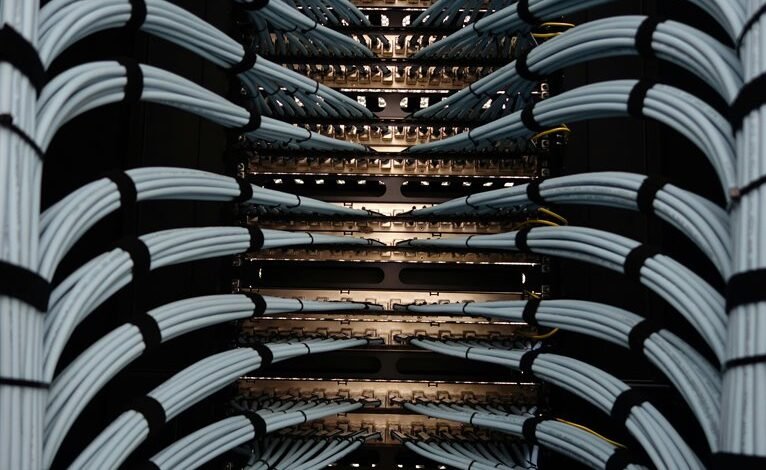
High-speed digital infrastructure is a critical element in today’s technology landscape. It facilitates rapid data transmission through fiber optics and is supported by data centers that handle extensive information processing. This architecture significantly influences business efficiency and drives innovation. As emerging technologies like 5G and edge computing evolve, their implications for digital ecosystems become increasingly complex. Understanding these dynamics is essential for comprehending future connectivity trends.
The Role of High-Speed Digital Infrastructure in Modern Connectivity
As societies increasingly rely on digital technologies, high-speed digital infrastructure has emerged as a critical component of modern connectivity.
Fiber optics facilitate rapid data transmission, significantly enhancing bandwidth capabilities.
Data centers, strategically positioned, play a pivotal role in housing and managing this data flow, ensuring seamless access and reliability.
This infrastructure underpins essential services, fostering innovation and empowering individuals with unprecedented access to information.
Key Components of High-Speed Digital Infrastructure
A robust high-speed digital infrastructure consists of several key components that work in concert to deliver efficient and reliable connectivity.
Central to this architecture are fiber optics, which facilitate rapid data transmission, and data centers, where vast amounts of information are processed and stored.
Together, these elements enable seamless communication and support the increasing demands of digital applications, ensuring optimal performance and scalability.
The Impact of High-Speed Infrastructure on Business and Innovation
High-speed digital infrastructure significantly influences business operations and innovation by providing the necessary bandwidth and reliability for advanced technologies.
This robust framework enables seamless communication, facilitating business growth through enhanced operational efficiency.
Moreover, it fosters innovation acceleration by allowing companies to leverage data analytics, cloud computing, and IoT applications, ultimately driving competitive advantages and fostering a dynamic environment conducive to rapid advancements and entrepreneurship.
Future Trends in High-Speed Digital Infrastructure Development
Looking ahead, the evolution of high-speed digital infrastructure is poised to reshape the technological landscape significantly.
Key trends include 5G advancements enhancing mobile connectivity, accelerated fiber optic expansion facilitating higher bandwidth, and the rise of satellite internet bridging rural gaps.
Additionally, edge computing will optimize data processing, reducing latency and empowering real-time applications, thereby fostering a more interconnected and efficient digital ecosystem.
Conclusion
In conclusion, high-speed digital infrastructure serves as the backbone of modern connectivity, enabling rapid data transmission and fostering innovation across various sectors. As businesses leverage this infrastructure to enhance operational efficiency, they position themselves to stay ahead of the curve. With the advent of technologies like 5G and edge computing, the landscape is set to evolve further, ensuring organizations are not left in the dust but rather, are poised to seize emerging opportunities in an increasingly digital world.